

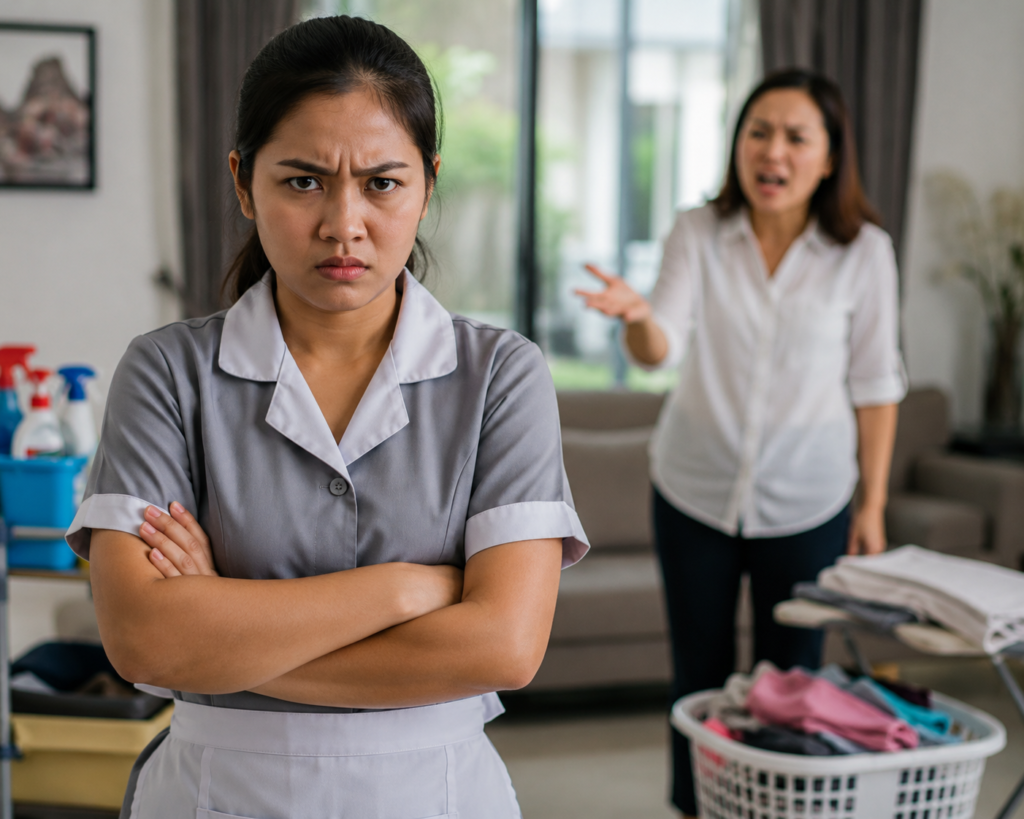
Many employers in Singapore ask a very practical question:
“After my domestic helper returns from her off day, can she still help with light household chores?”
The answer is not a simple yes or no.
While rest days are meant to be fully protected, some light, non-strenuous household tasks after return may be acceptable if clearly understood and not excessive.
This guide explains what is reasonable, what is not, and how responsible maid agencies in Singapore view this arrangement.
What Is a Rest Day for a Domestic Helper in Singapore?
Under Ministry of Manpower (MOM) guidelines, a foreign domestic worker (FDW) is entitled to:
- At least 1 rest day per month
- Rest days can be:
- Taken monthly or
- Compensated with pay in lieu (mutual agreement)
A rest day is intended for:
- Physical rest
- Mental recovery
- Personal freedom and social time
- No work obligations
Can a Maid Do Housework After Returning From Off Day?
✔ In practice: Light duties may be acceptable
From a practical household management perspective, some employers and agencies recognise that a helper may resume basic, low-intensity tasks after returning from rest day.
These may include:
- Light vacuuming of common areas
- Tidying living spaces (toys, clutter, cushions)
- Simple kitchen reset (clearing dishes, wiping counters)
- Basic organisation for the next day
- Routine surface cleaning
These tasks are typically:
- Short in duration
- Low physical strain
- Part of daily maintenance
- Not urgent or heavy workload
What Should NOT Be Expected After Off Days?
Even in flexible arrangements, there are clear boundaries.
A responsible maid agency would advise employers not to expect heavy or delayed chores immediately after rest day, such as:
- ❌ Full laundry (washing, drying, folding backlog)
- ❌ Deep cleaning bathrooms or scrubbing floors
- ❌ Ironing large batches of clothes
- ❌ Cooking elaborate meals for extended hours
- ❌ Staying up late to complete drying cycles
- ❌ Catch-up work from previous days
These require:
- Longer working hours
- Higher physical effort
- Time pressure
Which defeats the purpose of rest.
Why This Balance Matters
From a maid agency perspective in Singapore, this issue is important because it directly affects:
1. Helper wellbeing
Poor recovery leads to fatigue and stress accumulation.
2. Job performance
Tired helpers are more prone to:
- Mistakes
- Slow performance
- Miscommunication
3. Long-term retention
Most early contract terminations happen due to:
- Work overload
- Lack of rest clarity
- Unrealistic expectations
Best Practice for Employers in Singapore
A stable and healthy arrangement usually includes:
✔ Fully protected rest days
✔ No expectation of work during off days
✔ Light reset tasks only after return
✔ Heavy chores planned on working days
✔ Clear communication from day one
A good rule of thumb:
If it takes more than 60 minutes or feels physically demanding, it should not be treated as a “light task.”
Frequently Asked Questions (FAQ)
1. Can my maid work immediately after her rest day?
Yes, but only for normal, light daily tasks. Heavy or backlog work should not be expected immediately after a rest day.
2. What are considered light duties after off day?
Light duties may include:
- Tidying the house
- Light vacuuming
- Simple dish clearing
- Basic organisation
These should be short and non-strenuous.
3. Can I ask my helper to do laundry after her off day?
Laundry is generally considered a heavy household task, especially if it involves washing, drying, and ironing. It should not be treated as a light duty immediately after rest day.
4. Is it allowed for a maid to work on her rest day?
Rest days are meant for rest. Any work done should be:
- Voluntary
- Mutually agreed
- Properly compensated or replaced with another rest day
5. Why do agencies recommend limiting heavy chores on off days?
Because it helps:
- Prevent burnout
- Improve job satisfaction
- Reduce turnover
- Maintain better household harmony
6. What is the best way to manage household chores around rest days?
The best approach is:
- Plan heavy chores before rest day
- Keep post-rest-day workload light
- Avoid backlog accumulation
- Communicate expectations clearly
Final Thoughts
In Singapore households, managing a domestic helper’s rest day is about balance, not maximising productivity.
While light housekeeping tasks after return may be reasonable in practice, heavy or time-consuming chores should always be avoided immediately after a rest day.
A successful employer-helper relationship is built on:
Clear expectations, fair workload distribution, and respect for rest.